01 · Approach
I take design intent into production myself, at the fidelity the designer drew it.
I was taking hybrid creative and technical roles before the category had a name. Design intent is fragile. Most of it dies in the handoff from design to engineering. My job is to carry it intact all the way into production.
I have reported to CEOs, creative teams, marketing, and engineering on the same project at the same time: a designer who codes at production fidelity, and an engineer who came up through graphic design.
I set the creative direction, then architect and ship it. Today I build my own AI tooling: a spec-driven workflow with multi-agent code review. The agents do the volume; I own the direction and the final review.
The signature is motion and 3D, design-token governance, and WCAG 2.1 AA accessibility, all built to flagship-brand standards.
I run Analog Elk, a one-person creative and engineering studio with 15+ production properties live on infrastructure I operate myself.
02 · Selected Work
18-hour global cutover for luxury fashion
At Powerfront, the live-engagement platform used by luxury fashion and beauty houses, I owned the frontend v1-to-v2 cutover for the flagship account, verifying assets by hand on the regional CDNs serving each market. Shipped around 40 client implementations across fashion, cosmetics, and entertainment, and built a scaffolding tool and in-house CSS framework that turned multi-day project setup into a same-day task.
Entertainment.
Frontend implementation lead on the flagship luxury account, under strict brand-standards review.
Powerfront, 2018-2020 · References available on request
A multi-tenant platform, built and operated end to end
I designed, built, and still operate a self-hosted multi-tenant stack (Directus, Caddy, Neon, Matomo, S3 on EC2) behind 15+ production properties. On top of it runs a Next.js 16 platform of roughly 230 components with Stripe billing, cost and health dashboards, React Three Fiber backgrounds, and a full accessibility and performance pipeline. The AI tooling behind it is a Claude Code plugin with hybrid full-text and vector RAG over roughly 500 docs (Postgres, Qdrant, Redis), plus a 30-command spec-driven workflow with multi-agent review and automated staging-to-production.
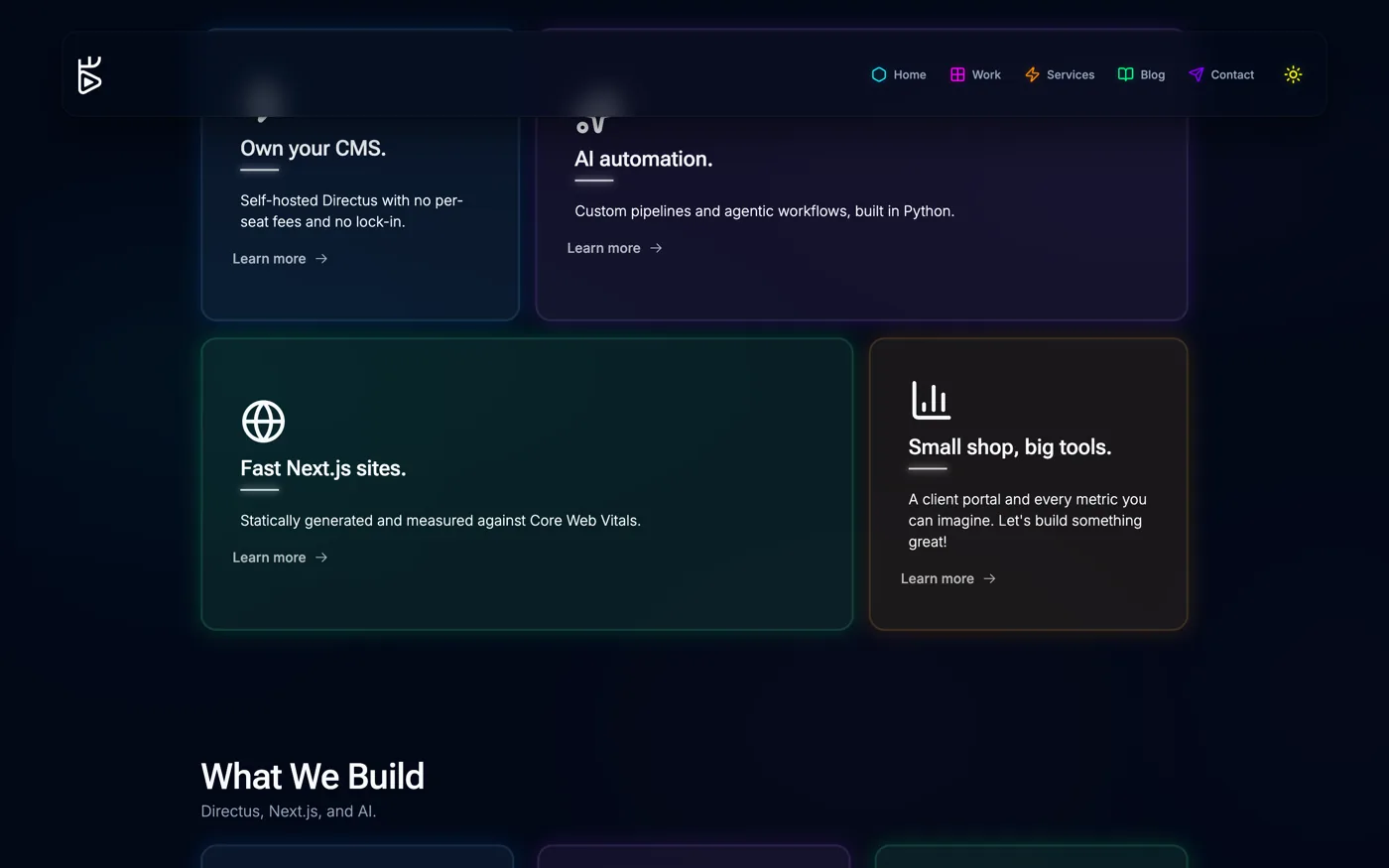 analogelk.com
A Raspberry Pi kiosk that retired a recurring vendor fee
Designed and built a daypart-aware Raspberry Pi kiosk that reads time-of-day (breakfast, lunch, happy hour, late night) and pulls specials from a self-hosted headless CMS, so non-technical staff edit menus, specials, and signage from a browser. Built the restaurant platform around it: dynamic menus, an events calendar, and a password-protected signage player with health-check monitoring. Eliminated the signage vendor's recurring fee with a one-time hardware purchase the client owns.
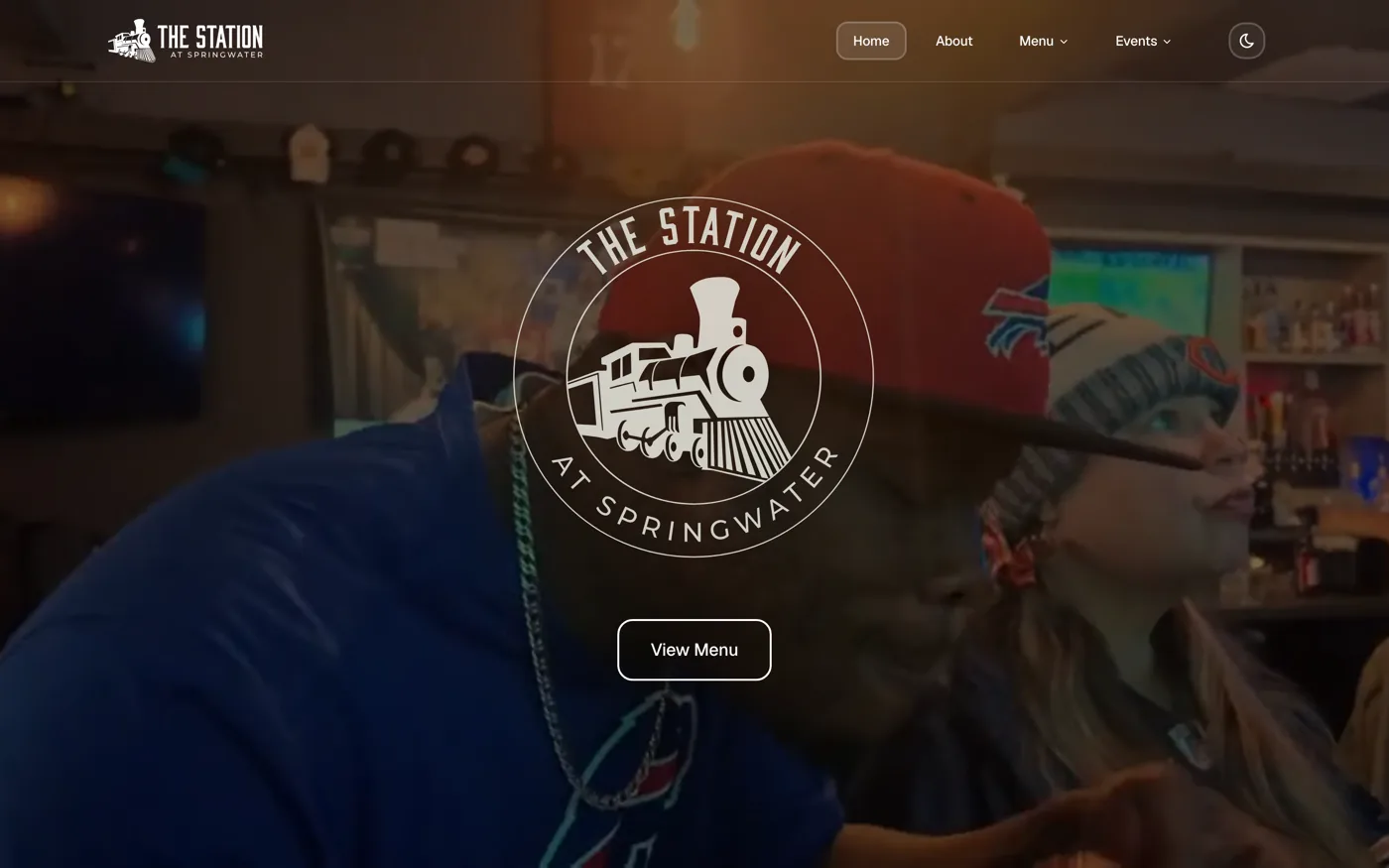 thestationpdx.com
A reusable WebGL motion system
Built a framework-agnostic animated-background package with gummy spring physics, scroll reactivity, inactivity detection, and a post-processing pipeline. Dual ESM/CJS build, consumed across Analog Elk properties. The canvas on the right and the hero at the top are this system running live in your browser.
03 · Capabilities
I move between these on the same project, not as separate roles.
Design & UX
- Brand identity & logo
- Design systems
- Design-token governance
- Typography & color
- Motion & interaction design
Frontend
- React 19 / Next.js 16
- Vue / Nuxt / Quasar
- TypeScript
- Tailwind v4 / shadcn
- Accessible HTML / WCAG 2.1 AA
Motion, 3D & AI
- Three.js / R3F / WebGL
- Framer Motion
- Shaders & post-processing
- Claude API / RAG
- Multi-agent orchestration
Direction & Leadership
- Cross-functional communication
- Mentorship & team standards
- Design & technical direction
- Architecture & code review
- Client-facing technical lead
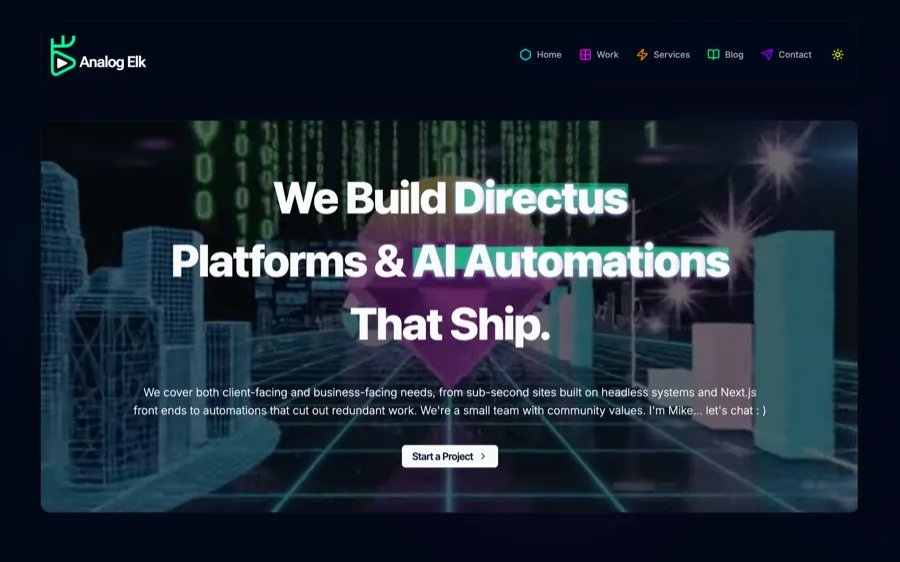
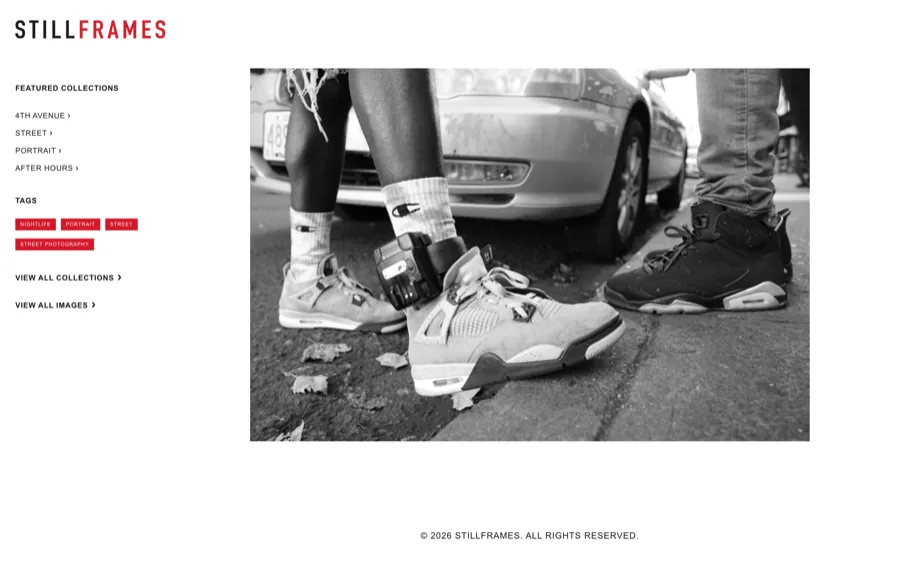
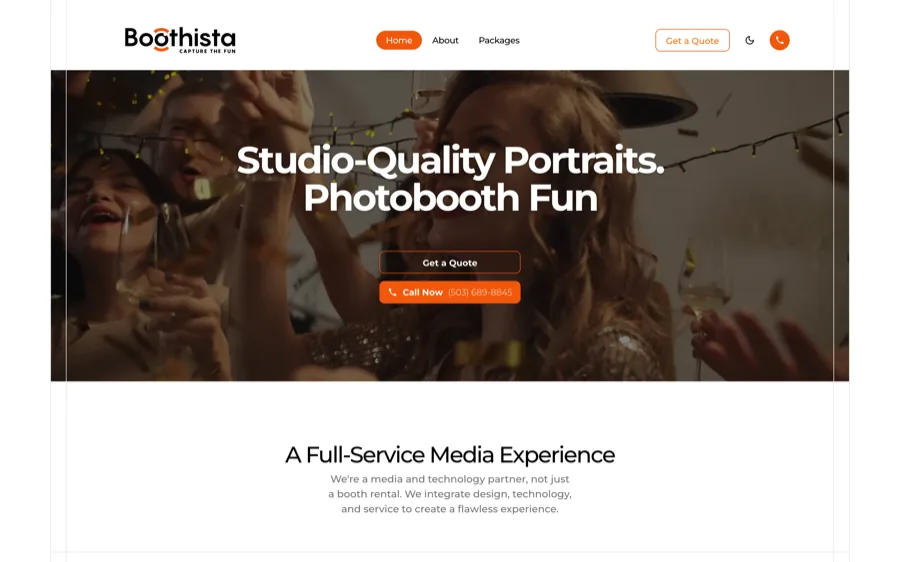
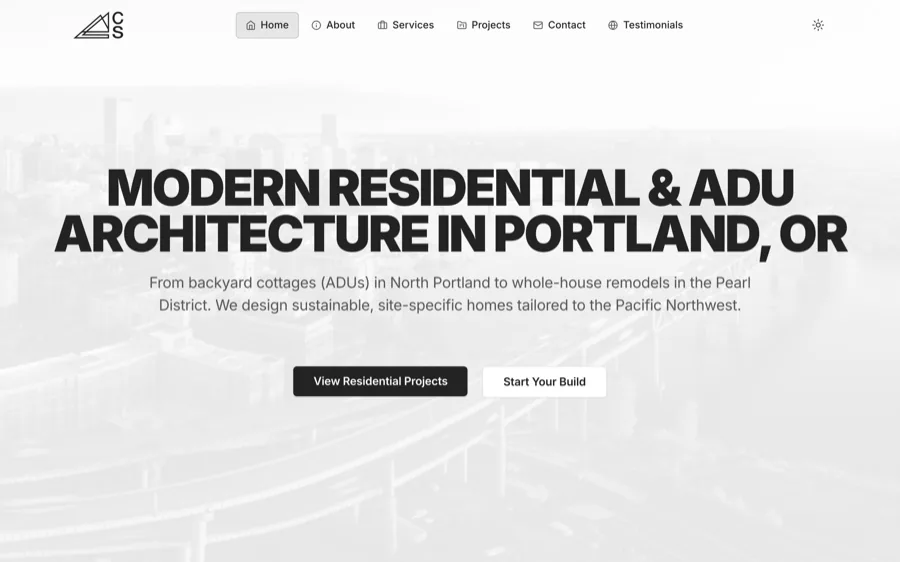
04 · Selected Properties (5 of 15+)
05 · Range
The same bar holds outside the creative lane: logistics, healthcare, enterprise events, and AI tooling. The record runs back to 2013.
Built the studio's AI developer tooling: a multi-agent orchestration system that runs k-of-n voting to decorrelate model errors across a spec-driven build-and-review pipeline.
Built a caregiver alpha to HIPAA handling requirements: geo-locked shift sessions, access controls, and audit logging.
Joined an eight-person team for Vue / Nuxt depth on a Big Tech cloud vendor's flagship annual event, under NDA.
Shipped a contract-required real-time freight tracker at a Fortune 500 logistics carrier in about three months, sole frontend on the two-person tracker team, live ahead of the deadline an eight-figure retail contract depended on. Also the longest-standing frontend developer on the carrier's marketing site, the only one on it from kickoff to launch.
Tied offline radio and broadcast spend to online submission events for cross-channel recruiting attribution during the national driver shortage, so the team could see which channels actually drove submissions.
Independent and short-engagement WordPress development with several small agencies, heavy Photoshop production design: the graphic-design roots of the design-to-code lane.
06 · FAQ
What does Michael Walliser specialize in?
Creative technology and UX/design engineering: carrying design intent into production at full fidelity. My core areas are design systems, motion and 3D / WebGL, accessibility, performance, and AI-augmented development.
What is a creative technologist?
A hybrid who works fluently across design and engineering, taking design intent into shipped, production-grade interfaces rather than handing it off between teams. I came up through graphic design and then spent over a decade on production frontend.
Where is Michael Walliser based, and what regions does he serve?
I am based in Boulder, Colorado, and serve the Mountain West and Pacific Northwest, including Denver and Portland. I work remote-first and am open to contract or full-time roles.
What kind of work does he take on?
I take on creative-lead, design-engineering, front-end-lead, and AI-product roles: luxury and brand-critical frontend, design systems, and 3D and motion web experiences. My background includes pixel-precise work across luxury brands, Fortune 500 companies, and Big Tech contracts.
How does Michael Walliser use AI in his work?
I build my own AI tooling, including a Claude-powered plugin with hybrid full-text and vector RAG and a multi-agent review pipeline, as a force multiplier so one person can design, build, and operate full production systems.